Showing posts with label blog. Show all posts

Thursday, January 8, 2015

16 Blog Content Ideas for Your Company Website


16 Blog Content Ideas for Your Company Website
If you use your website to market your company, you should be blogging. If you’re not blogging, make it a point in 2015 to at least give it a try. You might be surprised at the number of quality leads it brings to your site. Additionally, blogging is great for increasing your brand trust, it provides a valuable extra layer of service for your customers, and it gives you a chance to influence your industry in both subtle and sometimes not-so-subtle ways. The right blog post can go viral and have a remarkable effect on your business.
Many business owners don’t blog because writing is a difficult discipline to work into your routine. Plus, it’s pretty hard to think of a steady stream of topics to write about if you’re not used to writing. The good news is that there are ideas all around you; you just have to know where to look.

Blog About…

  • Your New Employee: The new guy or gal in your office can be the source of a quick, informative blog post that helps introduce your company to the amazing people who make it run. People like reading about other people, so sit down with your new employee and let them tell you their story for your company blog.
  • Your New Equipment: If you provide services to your customers, tell them when you get a new piece of equipment. It’s a good way to brag to your readers and show them you’re an industry leader. It’s also a good way to introduce the new services your equipment allows you to provide. Capitalize on that big purchase by promoting it on your blog.
  • Local Events: To drive potential new visitors to your website and inform your local community, consider publishing a local events calendar. This not only provides a valuable and relevant service to readers, it also increases your brand’s visibility when consumers perform a local search for events. Updating a resource like this at least once a month is a valuable content type.
  • Common Myths or Misunderstandings in Your Industry: Every industry has myths surrounding it that just aren’t true. Dentists, for example, get a bad rap for root canals, but most people who have had a root canal in the last ten years will tell you it wasn’t too bad. Come up with a list of common myths or misunderstandings and debunk them. These types of blog posts tend to do well and paint you as an industry thought leader.
  • Other Blogs in Your Industry: Make a list of the top blogs in your industry. It’s a quick, easy way to promote your industry as a whole, and it may lead to some beneficial partnerships, especially if your website is a big part of your overall marketing efforts.
  • Happy Customers: Besides claiming you have “happy customers,” why not interview a few of them so they could say it for themselves? This not only showcases customer satisfaction, but it also informs prospects about the types of customers your business helps. This is a great topic for videos, but you can post written interviews or share online reviews as well. For B2B businesses, you could ask the customer to share how they found out about your business, what kind of solution you provided, and how they felt about working with you. Then don’t forget to let them know the blog about them is on your site, they will be sure to share it.
  • Famous People: Everybody loves celebrities. If you come across a news story about a famous person using products you sell or find out a celebrity relies on a type of service you provide, share it with your readers.
  • How the Times Have Changed: Unless you work in 3D printing or some other relatively new field, your industry has probably undergone substantial change–maybe even while you’ve been working in it. Tell your readers about how your industry used to work, how the products have changed, or how the services used to be performed. Nostalgia resonates well with many audiences.
  • How Things Could Be Better: If you think there are problems in your industry that aren’t being addressed or impacting the consumer, write a quick post about how it could be better. A post like this offers solutions instead of complaints, and it shows off your expertise to your readers and potential customers.
  • The Good You’re Doing: If your business is engaged in any kind of charity or community action, write about it to let your readers know. Tell them what you’re doing and maybe include a few pictures if you’re working on a project. This type of blog post is not only good PR for your company, but it’s also a way to shed light on the cause you care about.
  • A Problem Your Company Solves: You’re in business because what you do, what you make, or what you provide solves a problem. Write about the problem in a way that most people can relate, and then explain in simple terms how your business solves that problem. This idea can actually be the source of many blog posts depending on what you make, do, or provide.
  • Something Unique to Your Industry: Is there a tool that is only used in your industry? Is there software that your industry uses to complete a task? Is there training that only employees in your industry have to receive? Think about something unique to the industry you’re in and tell your readers something they don’t know about.
  • A Day in the Life of Your Industry: TV shows have been created for the sole purpose of telling others what a certain type of employee does every day at work. Write a blog post about a day in the life of one of your employees and tell your readers what it’s like to work in your industry.
  • Getting a Job in Your Industry: Chances are some of your readers want to know what it takes to land a job in your industry. Does a prospective employee need certain credentials, training, or education to work in your field? Do you use recruiters to find employees or do people enter your industry in a unique way? Tell your readers what it takes to work for a company like yours.
  • Frequently Asked Questions: Do you or your employees hear the same questions over and over again? If so, chances are people are on the Internet trying to find answers to those questions. Write a blog post about the top frequently asked questions and give them a way to find the answers on your website.
  • Statistics: Appeal to your readers’ sense of logic by sharing interesting statistics about your industry with them. Write about the prevalence of people using your product, or how many people suffer from a problem you provide a service for. Use statistics to tell the reader why your business is right for them.
(via)

Saturday, May 10, 2014

Double Your Website Traffic by Blogging

How blogging can double your web traffic:
blogging and increasing traffic to your website
There are two ways that blogging can have a great impact on your web traffic.

1. Blog promotion over social media
If you promote your blog properly over social networks, you will drive more traffic to your website. How much traffic purely depends on how often you blog and how prolifically you share it over social media. The more blog posts you produce, the more compelling content you have to share over social networks = more traffic.
Sounds great right? But remember, in order for your blog to resonate with your target audience you have make sure that you’re posting the content your target audience will find intriguing and helpful. So do your research on your audience’s needs before you start. This is really, really important. What’s the point of writing content no-one is interested in? Take a look at this blog post to find out the basics of writing to engage.
If you manage to achieve this, not only will you drive more traffic to your site, you will be driving the right traffic to your site; people with a genuine interest in your business or product. 
2. Organic traffic through search engine optimisation

Saturday, December 21, 2013

8 Tips for Optimizing Images For Your Website, Blog & Social Media


image-compression

According to MDG Advertising, articles with images get 94% more views. If that statistic isnt enough to convince you to optimize your images, consider how images affect your engagement value on social media: Facebook, Google+, Pinterest, Instagram, Tumblr and even Twitter are all evolving into primarily visual platforms. Images are crucial to any content marketing strategy and, when optimized properly, can help to improve your rank on Google. Next time you upload an image for your blog, website or social media, try some of these tips:

1. Make sure the content on the page relates to the image.
This might go without saying, but its important to ensure that your image directly reflects the content of the page on which its published. If potential readers land on a blog post about kitchen appliances and see an image of the abominable snowman, they might get confused and bounce (get it? Bumbles *bounce*!).

2. Include a proper title & ALT text.
When uploading an image to your blog or website, be sure to name the file and apply the ALT text in plain English. This helps search engines to identify what the image is about and can help to improve your search rank. Be clear and descriptive, but don't stuff it with keywords.

3. Consider including captions.
Although image captions don't directly impact search rank, captions are a helpful feature for point #1 " ensuring the content on the page relates to the image. As images are more attractive to the eye than text, your website or blog viewers will be first drawn to your images and their accompanying captions. If viewers can instantly make a connection between image and text, its likely that your bounce rate will decrease.
4. Use proper image size and quality.
There is such a thing as an image being too large (or too small) for the Internet. In most cases, smaller images are better (without sacrificing quality, of course). To ensure quicker loading times, be sure to upload images of the appropriate size for your blog or website – don't make the browser take time to resize it. If your image is too large, there are plenty of tools available online to downsize (like Image Optimizer).

5. Choose the right format.
JPEG, PNG, GIF, oh my! JPEG images are easily compressible and are therefore best for small, high quality images. PNG images are a great alternative, though the file quality can sometimes degrade with a decrease in size and they don't support as many colours as JPEGs. GIFs suffer the same drawbacks as PNGs and are best used for animations. So, although all files can work, JPEGs are usually your best bet.

6. Use best practices for social media.
Social media platforms are quickly becoming more and more visual – posts with images are more engaging and more likely have a higher click-through rate and a greater number of shares than text posts. A bit of extra effort is required to optimize each images size and format for publication on each social media platform, but its definitely worth it – check out this social media image size cheat sheet as a guideline for how to size your images for social promotion.

7. Create your own graphics.
Original and creative content is always more engaging, and images are no exception. Its worth the investment to create your own graphics to explain your business's products and services, or to demonstrate expertise within the industry. Don't forget to incorporate your brands logo on your original images or graphics!

8. Stay legal.
Just because images on the internet are liberally available, it doesn't mean that all images are free. To be safe, always assume that images are protected and treat them accordingly. There are plenty of guidelines available to help you legally access images and copyright laws. Don't forget to read the fine print!

As they saying goes, a picture is worth 1000 words. Images are an important part of any inbound marketing strategy because they help capture your audiences attention, distinguish your brand, and make your content memorable. Including an image, regardless of whether it is a photo or a graphic, is one of the easiest ways to make your content more visible.

Wednesday, April 17, 2013

The Brand Marketer's Checklist When Tragedy Strikes


When news of the Boston Marathon bombing broke Monday afternoon, many took to social media to share information and concern for those affected. At the same time, some marketers didn’t take appropriate steps to alter their messaging in light of the unfolding situation, causing embarrassment and unnecessarily adding noise to response efforts. While it should be important for any marketer to prevent negative publicity, it's more important to show respect when tragedy strikes. Follow this checklist to ensure your brand communicates appropriately through all online channels in the event of an emergency.
1) Immediately Disable Scheduled Tweets, Posts and Emails
Brands who schedule their posts in advance may cast themselves in a negative light when solicitous messages are broadcasted in the early stages of a breaking news event, especially ones involving injury and loss of life. Every marketing team should have someone responsible for immediately disabling all scheduled social media posts and emails when an event occurs.
Checklist
2) Alert All Employees
If your employees are active on social media, it's important that they be alerted immediately to breaking news stories in case they also have posts scheduled. Employees who are unaware of a developing situation may inadvertently bring embarrassment to themselves and the brand through insensitive and oblivious comments.
3) Alert Your Followers With Appropriate Updates
For marketers who manage brands with brick and mortar establishments in affected areas, or for those who provide services that may have been impacted or can impact rescue efforts, it may be appropriate to alert your community with appropriate information, such as transportation closures, triage sites and donation efforts. Consider putting together a small task force that can prepare and deliver messaging in times of crisis.
4) Review Content Calendar
Once you're disseminating appropriate information, turn your attention back to your own upcoming marketing efforts. Check your scheduled content, both queued for publication and production, and remove any content that may be insensitive. One innocuous word in a blog post title may take on new meaning following a tragic event.
Optional - Send Condolences
For certain brands, it may be appropriate to post messages of condolence for victims and their families, but avoid pandering or grandstanding. In times of difficulty, however, silence may be the best option for brands.
Avoiding any social media faux pas can save your brand from potential embarrassment, but more importantly, show respect for those who have been impacted.

(via)

Sunday, March 31, 2013

Where Are These Influencers, Anyway?

Image
Influencer marketing. Influencer targeting. Influencer outreach. Influencers, influencers, influencers. We keep hearing about how important they are to our brand and why we need them. But, where do we find them?
Don’t panic yet, the first thing to grasp is that influencers almost always operate a blog and searching for bloggers is the easiest way to find influencers. And, the nice thing about bloggers is that they also tend to be very active on various forms of social media so aligning with them gets your positive mention spouted across many channels. Score.
Another thing to grasp is that an influencer is a contextual fit for your brand, not something that can be quantified by Twitter followers of Klout. Numbers cannot tell us what their audience looks to them for. Your judgment can tell you this however. So, influencers our found by searching for a genre and niche that you want to expose your brand to. Of course you want your influencer to have “reach,” but should just be a starting point, not the defining factor.
Once you’ve honed in on the genre and niche to target, it’s time to pick which blogger outreach tool you are going to use to locate your influencers.
Google blog search is the best free option but if you are going to be doing a lot of influencer targeting then you want to check out a tool like GroupHigh (Full Disclosure: I work with GroupHigh). GroupHigh allows you to customize your influencer targeting by filtering your results by keywords, Twitter followers, MozRank and 20 other options.
One of the most obvious places to look is to the customers who are already advocating for your brand. Incentivize them or at least thank them for their efforts and recommendations. A shout out will make them a lot more likely to keep up the good work!
Lastly, research is showing that the most influential people for brands are actually the midlevel bloggers. Because these people have a smaller audience, they can nurture their relationships a little more which makes their audience tend to be very loyal.
Bloggers, contextually aligned writers, advocates and midlevel bloggers! Where have you found influencers for your brand?

(via)

Saturday, March 23, 2013

5 Reasons Your Viral Video Won’t Go Viral

Viral Video content
Marketing executives and advertisers speak of the “viral video” in hushed tones, fearing that if they express their desire to “go viral,” aloud they’ll be met with a chorus of angry naysayers screaming “you can’t make a viral video, they just happen… as if by magic!” They still all want one, though. Developing, producing and successfully launching a viral video campaign is equal parts inspiration and orchestration, and based on my 7 years of running a creative agency that makes videos, here are some of the things that keep them from getting off the starting line or fizzing out along the way.
1. TMI! TOO MUCH INFORMATION You started with a funny, crazy idea but got worried that there wasn’t enough “message” or “call to action” so you kept adding and adding. You wondered why the video got less and less entertaining. Congratulations, you made an infomercial. At the very best, you made an ad. Most people run away from ads unless it’s Super Bowl season or from a brand that consistently makes good ads, so don’t count on them sharing your video too much. One of the main purposes of a “viral video” is to build awareness of and/or interest in something. Leave the messaging and selling part of it for the areas that surround the video and the wider conversation,  and let the video do it’s job of going viral.
2. YOUR VIDEO’S NOT FUNNY, THRILLING OR SHOCKING ENOUGH It all starts with the big, creative ideas, and ends with the brass having the balls to push the limits of acceptability and do something completely unexpected and memorable. Videos that go viral all have one thing in common. People are thrilled by them, the cover their mouths in surprise and have the sudden urge to show them to other people. Lots of viral videos are just real life events that happen, but many of them are obviously produced for brands, and as long as they’re good, viewers don’t mind a bit. When you’re producing a video with the intent of going viral, you have to tap into those feelings of excitement, amazement and if at all possible, make it funny… really funny. Not vanilla funny with a side of mild humor. I can’t think of a single brand out there that can’t do with some funny, and in the right hands, anything can be made hilarious.
3. LACK OF PAID MEDIA SUPPORT People can’t laugh at, be amazed by and share something they can’t find. In almost every case of branded entertainment, you need some form of paid media buy to jumpstart the process. You know those brand videos you see in the top viral charts, the ones that got there on sheer amazingness? Yeah, not so much. They do have to be amazing, but they also need a big, paid push at the start. It’s done all the time and is no less ethical or purist than paying for TV audiences, radio airtime or billboard space. Paid media support can come in the form of video seeding, paid ads, promoted content on Facebook, Twitter or YouTube, paid placements on blogs, publications or paid influencers.
4. LITTLE OR NO BLOG, PUBLICATION AND INFLUENCER OUTREACH Aside from, or in addition to, the paid tactics, there’s the earned media approach. This consists of pitching bloggers, writers and influencers and making them  care enough to share your video with their readers and viewers. This tactic is very effective provided you’ve satisfied #2 and are ready with #5.
5. WEAK SOCIAL MEDIA SHARING STRATEGY Viral videos live and die on their ability to be shared. So grease the skids. You’ve made a great video, paid for initial support, tapped some awesome bloggers,  writers and influencers to help push it along but you didn’t develop an integrated sharing strategy that goes from the initial activity you’ve bought or earned, to your social media channels and current fans of your brand, out to new fans. For example, when that awesome influencer blasts out to their one million Twitter followers, are you prepared to capitalize on it and push it further? How about the videos your fans are starting to create (on their own or because you suggested it) based on your video? Do you have systems in place to make them into rockstars and promote their content? Viewers will see their videos and want to make their own, but first they’ll have to watch the original.

Friday, February 8, 2013

How to Draw in an Audience for Your Company Blog

Image
Congratulations! You’ve started up a blog for your business and have been blogging steadfastly each week (or even every day) on it. And while it’s certainly enjoyable to work on and play around with, for whatever reason the company blog is lacking a certain amount of foot traffic coming in. Is anybody even reading your posts? Maybe they are and maybe they aren’t, but you don’t want to sit around waiting for readers to slowly trickle in. It’s time to start building and keeping an audience for your blog without relentlessly plugging yourself night and day on Facebook and Twitter (“check out MAH BLOG!”) to the point where everyone feels tired of your blog before they’ve even begun to start reading it.
Write Compelling Titles and Content
What inevitably makes or breaks a blog in the end is the quality of the writing found there. If the content is consistently strong and on topics that a reader would expect to find and genuinely want to know more about, the blog will develop a reputation for what it offers that will help carry it far. Start your company blog off on the right foot by creating well-written and thoughtful blog posts with titles that are short, to the point, and draw the reader in as much as possible. Employ a similar process for the blog posts too – they don’t need to be epic sagas. Less is more and provides the reader less of a reason to leave midway through reading because it just got to be too long.
Not a writer? Look into working with a freelancer who can help create solid content for you. Not working in an industry where a wordy blog is right for you? Fill up your blog with creative videos, photos, and quick blurbs to illustrate what’s happening in each post.
Avoid Cheap Tricks
“One lucky commenter will win a free mug!” Ah, the old reel ‘em in with a freebie approach. While not a bad thing to utilize when you’re first starting out and want to begin establishing a name for yourself online, the more you do it the less readers arrive to your blog in search of expertise. They’re in it for a gift card and you can’t constantly offer up a gift card as an incentive to read every new post. Use your giveaway once wisely and save the follow-ups for later once your blog builds up a strong following and presence.
Bring on the Guest Bloggers!
Ideally when you first start blogging, you’ll want to interact with the readers and those who leave behind comments as much as possible. But starting out usually means starting from the ground up and seldom does that ground include instant interaction immediately. Begin looking into having partners with your business and established writers offer up some guest blog posts to your site. It’s a great way for these writers to share their story and bring in a readership that might not have stopped by to your site before. And vice versa on this one – offer to write a blog post for their company blog too!
Always Include Sharing Buttons…
The key here is to cast a wide net when it comes to sharing your blog posts. Include easy to find buttons with every post that allow the reader to instantly Facebook, Tweet, Pin, Stumble, or share on LinkedIn the article they just read.
… and Add Tags and Categories While You’re At It
Internally, this will help keep your posts more organized on key topics that you write often about and allow you to find certain niche topics easily. Externally, it does a similar service for the reader looking to find a particular post they read a week ago but don’t remember the name of. Rather than scroll endless through a series of pages to find it, they can make a beeline for the category or archive instead. Always keep these as updated as possible and make the tags as content-relevant as you can, rather than making up your own tag names. It’s definitely fun to do, but it doesn’t make it any easier to help find you.

(via)

Saturday, December 22, 2012

Using social media monitoring to identify the influencers relevant to you


The sheer wealth of social media monitoring tools available is matched only by the richness of practical uses that they afford users. Considering this, I thought it would be useful to list some of the key ways you can get the most out of your monitoring tool, starting with identifying influencers. 


Goals
This is something I mentioned in the last post, but clarifying exactly why you want to find influencers will inform who you are looking for. Are you seeking notorious individuals with only a passing association with your market, or are you looking for bona fide industry experts? It’s best to establish these aims as soon as you can, preferably before you being any monitoring in earnest. 

The process

Your objective may be to isolate the biggest advocates of your brand to complement some of your marketing or sales activity, or perhaps to help your community management efforts. This means you’ll be looking for those that already talk about your industry or brand in particular. 
Looking at a data set about Raspberry Pi, we can investigate the best ways to find these types of authors. Remember that though in this example we’re looking at specifically influencers about Raspberry Pi, it could also be about a wider trend or industry, not just a brand. 
A smart first move would be to view your authors (or just twitter handles in the less-potent tools) and sort them in order of volume of mentions that match your search over a set time period, in this example two months. 
Raspberry Pi influencers
It’ll come as no surprise that the official Raspberry Pi account is the author that most frequently mentions their own product. Authors such as Rob_Bishop also reveal themselves to be employees upon closer inspection of their profiles and mentions, though others begin to look promising. This is definitely an essential: evaluating the content of these blogs and tweets is the only way you can truly assess how appropriate each influencer is. 
Indeed, RaspHub prides itself on providing news about the Raspberry Pi product, so could be a potential influencer. Looking more at individuals rather than institutions, authors such as Matt Richardson – who has mentioned Raspberry Pi over 70 times over the past two months – definitely an indicator of an advocate. 
You may also be wishing to target blogs and sites, rather than people. We can then filter by site type – news, forums, blogs etc – to find the sites that are mentioning Raspberry Pi the most. Using this process, we can see that Element14, Adafruit and Linuxlife are all frequent discussion places of the revolutionary computer, if we filter to view only blogs.  

Influence validation

Verifying these advocates as credible, or at least worthy of your efforts, is also important. After compiling your list of potential influencers (either people or sites), it’s time to validate them.
Evaluating the metadata attached to each mention is integral for this stage. With sites you can look at various third-party scores, such as Comscore or Alexa traffic stats, backlinks or even better – MozRank, if your tool provides it. They are all useful ways to make sure the sites are credible and have an audience that is worth pursuing. Many tools will also include demographic data for the visitors of each site, which may help you further understand whether that site’s influence is relevant to your aims. 
With individuals, it’s a different type of metadata that you’ll be looking at. Initially, you can assess the raw metrics, such as number of followers, network size and other numbers that indicate reach. Stepping into murkier waters, there are countless influence-quantifying systems available that attempt to give a value to each author.
At Brandwatch, we use Kred’s Outreach and Influence metrics as well as PeerIndex scores to help users determine which influencers are more significant than others – the tool also includes a bespoke system to measure influence across all mention types. Other tools will have either custom metrics, alternative partners (likeKlout) or may leave it up to the user to decide which metrics are the most important in determining influence for them.
In any case, it’s this metadata that will help you validate the quality of each advocate, helping you create your perfect list of influencers. 

Reverse that!

Your company’s aims may be more focused on finding higher value influencers that are as-yet not converts of your brand, industry or niche. This process is easy enough for you to engineer, it’s almost a case of reading this article backwards. 
You can use the same data set, but initially instead of ranking by frequency of mentions, you can use the accompanying metadata to filter your results. Returning to the Raspberry Pi example,  this would involve selecting the influence metrics you find most useful (for this example I’ll use the Twitter-only Kred Influence) and sorting accordingly. 
This stage requires a bit of manual input. Though sorting by influence will bring the most important influencers to the top, they may be too difficult or broad to consider a viable target. In this case, it’s not unreasonable for Raspberry Pi to consider TechCrunch Twitter account as a realistic influencer to target with their content, but a smaller company may eliminate these as too influential. 
Scobleizer however, appears to be a valuable influencer, with almost 300k followers and high Kred influence scores. Looking at MozRank to determine influence also highlights a few notable blogs, like makezine.com and wired.com. It’s best to use a combination of different influence and credibility metrics to isolate the mentions you’re most interested in, so that you produce a list of high value targets from a range of criteria. 

Relevancy validation

Now comes the second stage of the reversed process, whereby you make sure all these high influence value mentions are relevant enough to your search. Look through your influence group you have just complied – some tools will allow you to create author or site groups in the app – and check to see how many times your search is matched. One mention on the BBC is sure to have high influence metrics, but this is where you realise they have too broad an audience and have only mentioned your product once in the past year.
Diving into the specific mentions will also help you paint a clear picture of how relevant each influencer is to your search, and by looking through their posts and tweets you can get an idea of the context of each mention.  
This validation process will help you find that happy balance between frequency of mentions and influential authors, in the opposite way we produced the list in part one of this post. 

The bottom line

You need to be looking at both relevancy to your search AND the metrics that help determine influence. Your approach may value one process over the other, but the essential part is that you undergo both of them in order to find a suitable list of influencers.
This is just one of a series on the most effective ways to use a monitoring tool, so stick around for more insight.

(VIA)

Saturday, December 15, 2012

15 Steps for Creating a Successful Social Media Giveaway Contest

Everyone loves getting something for free. In fact, one of the main reasons that people “Like” a brands Facebook page is so that they can either obtain a discount or win something.
15 Steps for Creating a Successful Social Media Giveaway Contest
The rise of social media allows businesses to easily create their own contests and giveaways that can:

  • Build links to your website (great for SEO)
  • Increase traffic
  • Create social engagement
This then can lead to increased brand awareness and the sharing of your contest on social networks such as Facebook and Twitter.  So giving away something for free can result in free marketing.
In this article we will go through 15 steps to set up, promote, and use “giveaways” to improve traffic and social engagement.


Step 1.  Determine the goal of the giveaway

What is the primary purpose of the Giveaway?  Is your focus to increase social engagement to your Facebook or Twitter pages? Or are you interested in using Giveaways as a link building strategy?

The goal that you choose will determine the type of contest and entries that you will run.  Additionally, you also need to determine your budget for promoting the Giveaway.

Step 2.  What will you be giving away, and how long will the contest run?

Based on the goal of the contest, your margins, and your audience, you can select a giveaway product that people will love.

If you have an obscure product, giving it away may not be a sufficient incentive for people to enter your giveaway.  In that case you may choose to give away a Visa gift card or Ipad or something that everyone will want.

Additionally, you must determine how long your contest will run.  We find that 1 month is optimal, as it gives you enough time to get the most out of the giveaway, without being much too long thus causing people to forget all about it.

 Step 3.  Create your giveaway on Rafflecopter

Why Rafflecopter?  Because it’s awesome.  It takes minutes to create a Giveaway.  It gives you the ability to create multiple entries so that through one Giveaway you can fulfill various objectives, including link building and social engagement.  It’s very inexpensive.  And it can be integrated into your page, Facebook, and other blogs.

Creating a Giveaway Contest on Raffle Copter

Some of the entries that we recommend are:
  •  Tweet about the Giveaway
  • Leave a Blog Post Comment
  • Follow @yourname on Twitter
  • Easy entry for all YourName fans on Facebook (fangate)
  • Like this post on Facebook
  • Google +1
  • Follow us on Pinterest
  • Follow us on Instagram
  • Subscribe to us on YouTube
  • Link to us from your Blog
  • Tell your Community (For 25 more entries, post a link to this giveaway on your blog,  favorite community, forum, facebook group, or any other place where you think people would like to hear about the chance to win! Note: You can do this once per day, but each entry must be a different community.)
  • Join Our Newsletter (We send the occasional newsletter with tips and specials that you’ll be the first to hear about!)

Step 4.  Add the widget to your site and to Facebook

Once the Giveaway is created, Rafflecopter will give you an embed code that you can easily copy and paste to your site.

TIP:  Upload the widget to a permanent page on your site.  After the contest is over, you remove the widget, but all of the links and publicity generated to that internal page of your site will remain.

Adding a Rafflecopter widget to your blog or website

Within Rafflecopter, you can select a button to Share to Facebook.  As easy as pie, Rafflecopter will create a Facebook app with the widget, including a disclaimer, necessary to run Giveaways on Facebook.

Be sure to create a banner on your home page or sidebar promoting the Giveaway, so all of your site visitors see the Giveaway and have the opportunity to enter.

Step 5.  Establish benchmarks

Before you launch your Giveaway, create a document for yourself with your benchmarks.  Here are a few that you can consider:

  • Number of likes on Facebook
  • Number of Google +1’s to the page
  • Number of Retweets to the page
  • Number of inbound links
  • Average monthly visitors
  • Conversion Rate

Step 6.  Create an email announcing the giveaway to your email subscriber

Reaching out to your current customers and subscribers gives you an opportunity to “seed” the giveaway with existing fans.  Additionally, this gives your customers an opportunity to engage with your brand.

Step 7.  Submit your giveaway

There are a large number of sites that can be used to promote giveaways and contests.  Most are free, and some give you the option to pay to enhance the visibility of your contest.

Here are a few to help you get started:

Step 8.  Reach out to giveaway bloggers to promote your giveaway

There are many blogs dedicated to promoting Giveaways.  These are typically run by mommy bloggers or stay at home entrepreneurs that are dedicated to finding and promoting giveaways.
There are 3 types of Giveaways that you will encounter:

3 Types of Giveaways

It’s important for you to be clear when you are reaching out to cut down on emails back and forth and maximize your response rate.

To create a list of sites to reach out to, visit the sites above and click through their giveaways.  Create a list of these sites, with their contact info.  Then, email those people asking them if they’d be willing to promote your Giveaway

Once you’ve had responses from people and have a database of potential sites, it’s important for you to validate these sites and to check out their statistics so you can select the most powerful sites to move forward with.

 LinkResearchTools.com to check for a large variety of statistics:

Link Research Tools

It measures many stats including:
  • Inbound links from Unique C classes
  • Alexa Rank
  • PageRank
  • Facebook Likes
  • Pinterest Followers
  • Stumbleupon
  • ACRank
  • TitleRank (does the site rank for the title of the home page?  If it does, it’s a healthy site.  If it doesn’t, it may be banned or penalized in Google)
  • Link Velocity Trends
There are other tools you can use, including OpenSiteExplorer and Ahrefs

Step 9.  Determine promotions budget & track your outreach

It’s important to stay organized while you go through this process!  There will be so many emails back and forth, each at different stages of the promotions process, that things can easily slip through the cracks.

PODIO to keep track of each and every single potential giveaway partner.  Within podio I created a custom app for “Inventory”.  Any one that replies, I add them to the inventory including their contact info, site statistics, and notes.
Podio
By connecting Podio with gmail, as people reply I can create tasks in Gmail that get sent to Podio so I can follow up.  I also add notes to each of the partners, thus keeping the progress of each one up to date.  By keeping all of the data in Podio I can easily compare at a glance the price and power of each site.

When choosing how to spend my marketing budget, I will sort in Podio by different factors such as Alexa, Pagerank, Inbound links and AC rank to see what sites surface to the top for each. Then I will compare the price for each to determine the best way to spend my budget.

DOCUMENT EVERYTHING!  If you do not use Podio or a project management tool, it is very easy for the project to become very overwhelming!

You may even choose to add Paypal transaction ID and other such data and then create a Cost App in Podio to track the total expenditure for the project.

Step 10.  Promote your giveaway on a daily basis

Did you know that thousands of sites host “Linkies”?  By going to these pages, you can submit your giveaway through a “Linky” form on these sites.

Here is a list of Giveaways that we’ve created based on the day of the week:


Additionally, you may choose to advertise your Giveaway on a variety of platforms.  Here are a few options:

  • Promoted Posts on Facebook
  • Use StumbleUpon’s Paid Discovery
  • Reddit’s advertising platform
  • Promoted Posts on Twitter

 Step 11.  Email the giveaway entrants to encourage them to come back

Halfway through the contest, send out an email to all of the entrants to encourage them to return to your site for more entries.

You may choose to add a new “Mega Entry” to encourage people to participate, or simply by sending them a reminder you may generate more buzz.

By sending out an email, you may get some of the existing entrants to Tweet about the Giveaway, or post on their Facebook page, or Pin your contest, which will in turn generate more exposure to your Giveaway.

Step 12.  Select your winner!

If you’ve continued advertising your giveway and submitting to Linkies, you should have several hundred entries by the end of the 15-30 day period.  Depending on how many entries you made available will determine the total number of entries.

Within Rafflecopter there is a way to select the winner.  Once you select and verify the winner, Rafflecopter will display the winner automatically through the widget.

Notify the winner immediately and ask them for permission to use their picture in an email announcing the winner of the contest.

 Step 13.   Upload emails to your email list

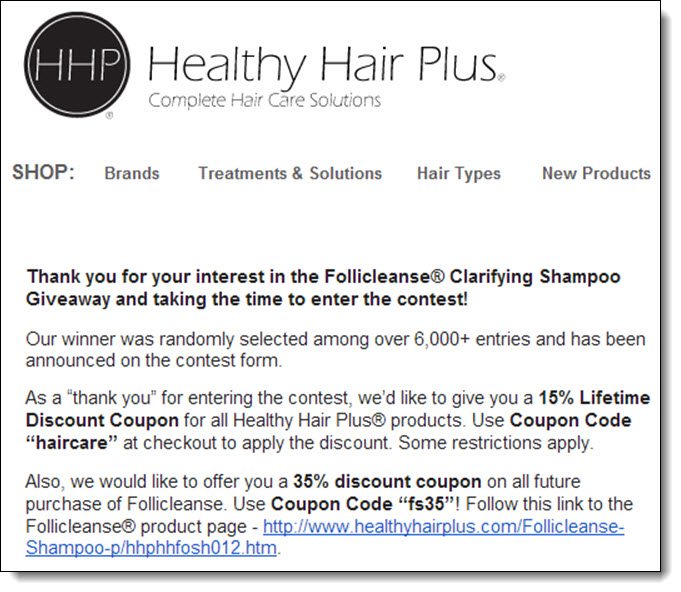
If you included an email collector as an entry, or included in the Disclosure that entrants would be added to your mailing list, download the spreadsheet from Rafflecopter and add the emails to your email list.   Send out an email to your list announcing the winner and thanking people for participating.

Creating Rapport with contests
This is a great opportunity to start the process of converting them into customers.  Give them an amazing incentive to purchase from your site, by giving them a very large coupon code, or something for free.  Your goal at this stage is to make your email so appealing that people won’t immediately unsubscribe.

Start a rapport with the contestants and start warming them up to your brand!

Step 14.  Mail out the prize

Don’t just send out the product in a boring box.  Make it beautiful!  Add a personalized letter or something that will make the winner feel special.  

Encourage the winner to share about winning the price, and to review your product on their site.


Step 15.  Remove the widget from your site


After you’ve sent out the email, remove the widget from your site.  You’re all done!

Conclusion

If you follow these 15 steps, you will be able to create a successful contest with thousands of entries.  Depending on the entries that you choose, you can easily increase your number of Facebook Likes, Twitter followers, Google +1’s, and Pinterest followers.

You can generate social engagement and buzz by having people view and follow you on your social media channels.  Additionally, you can generate links to your site by paid promotions as well as using “Link to Site” as one of the Mega Entries.

Gaining this exposure will give you an opportunity to find new Brand Ambassadors, Customers, and to increase your organic traffic from the search engines.  For a small price, you can gain an amazing number of permanent  links and followers!